

Light in the dark

– I love opposite emotions. I’ll be very, very sad about something and suddenly I’m driven to joy. You can be in the most beautiful place and suddenly become very melancholic, says Paul Lightfoot.
– You’re always inspired by contradiction, aren’t you? Especially us, says Sol León.
The story of Sol León and Paul Lightfoot is itself a story of contrasts: two cultures, two languages, a woman and a man. She is adagio, while he is ready for allegro.
Oslo is a city they often describe as their second home, and over several decades they have built a particularly close relationship with the Norwegian National Ballet. Soon, the curtain rises on an evening devoted to León and Lightfoot, featuring a Norwegian premiere alongside one of the duo’s most celebrated works.
Here, too, contrasts meet. Salle de danse is an energetic, life-affirming work with more than 40 dancers on stage. It stands alongside the cinematic Shoot the Moon, where five dancers move between three revolving rooms.
Both works bear the hallmarks that have become part of León and Lightfoot’s signature: precision, theatrical power and an intensity that asks dancers to go far beyond steps and counts.
A Daily Prayer
Every day in the fleeting life of a dancer begins by moving through a sequence of familiar rituals: from barre to centre, from plié to grand allegro, through ronds de jambe and adagio. It is in this daily practice that León and Lightfoot found the point of departure for Salle de danse.
Class was amazing. It was like going to the doctor, going to church
– Class is what you do. It’s your prayer. And for me it was always the moment of community, says Lightfoot.
For Sol León, morning class also represents a sense of loss. With age, she has lost the ability to move as she once did, and with it a ritual that was a natural part of everyday life for many years.
– Class was amazing. It was like going to the doctor, going to church. It was that moment when you cleaned yourself, tuned yourself like an instrument, and felt the tuning of everyone around you, says León.
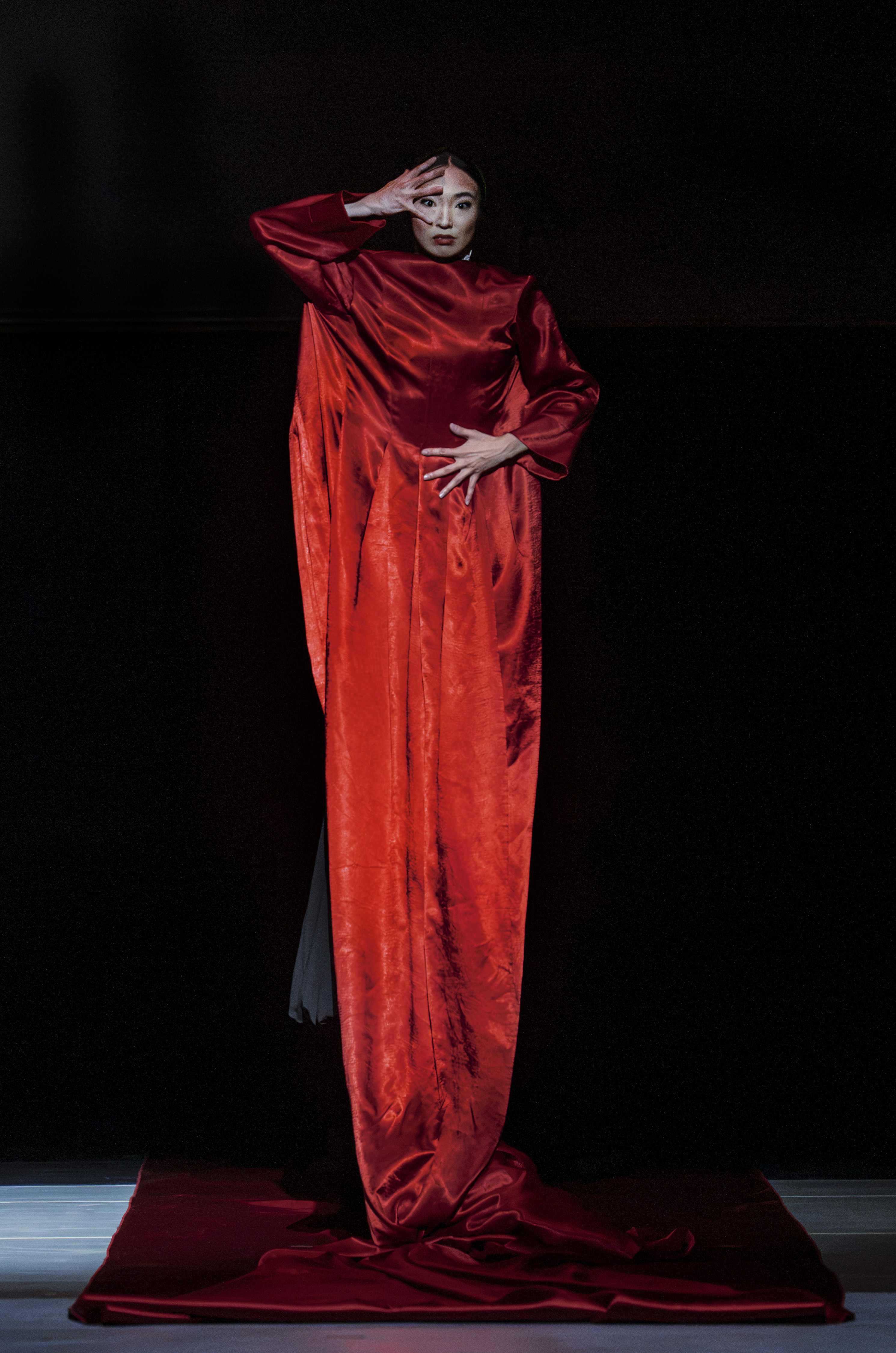
In Salle de danse, those memories take physical form. Against the black-and-white world that characterizes many of the duo’s works, a figure dressed in red emerges.
– Red is blood. Red is passion. Dance takes such a huge part of our lives during a career that lasts, at most, forty years. Afterwards, that dedication becomes part of memory.
– Memory can take you in many different directions. The point is not to get stuck in it, but to transform it. To look back on something difficult and understand that it was also something very special.
The work originated in a film created by Paul Lightfoot during the pandemic, when the need to create together took on a new meaning.
– I really needed to feel we were a company in that moment. The strongest message in Salle de danse is that feeling of company, family and community. It’s a celebration of what we can create together.
– I suffered during the pandemic. I lost my father at the very beginning, and I had such a strong need to speak about beautiful things. Creating this work became an absolute exertion of positive energy. For me, it wasn’t about limitation. It was about possibility, says Lightfoot.
At the same time, the work leaves room for the playful and absurd, recurring elements throughout much of their oeuvre.
– The foundation was a strong, constructive message, but also a slightly ridiculous one. I think silliness can be very important. So I went in directions that could seem quite mad. Somehow it doesn’t turn out to be madness, but to make logic, says Lightfoot.
León also describes the pandemic as a period that changed how she looked at the world.
... was the first time I really saw the trees around me
– It was the first time I really saw the trees around me. I looked at everything with new eyes and treated it as a creative process. And I felt grateful for all the things we’d had every single day, but hadn’t always appreciated.
– It’s like Taoist philosophy. If you try to contain water, it will always find a way through the smallest opening, says León.
What Returns
From the expansive to the intimate: Shoot the Moon inhabits an entirely different world. Only now, twenty years after its premiere, does León feel the work has become what she always wanted it to be.
– Shoot the Moon is about solitude within a relationship. It’s not my story, but you have to get extremely close to something personal in order to reach the universal, says León.
– How do you hide your solitude?
The work demands that dancers go far beyond the movement itself. They learn the material, explore it, strip it away and return to the beginning.
– Shoot the Moon can’t just be put on like a costume. The dancers have to understand it from the inside, but also be able to step back from it, says Lightfoot.
The two works are also markedly different in process. In Shoot the Moon, the choreographers search for the unique chemistry between five intense personalities. In Salle de danse, they encounter the full spectrum of a company, dancers at different stages of their careers.
– The beautiful isolation of Shoot the Moon is the reverse, the convex or the concave, of the optimism in Salle de danse, says Lightfoot. I love the contrast in this programme.
– It’s the contrast between the two of us as well, says León.
– We’re both in both works…
– …you get to see both sides. That’s what makes it complete.
 Kristian Alm / Photo: Erik Berg
de danse