

We live a Romeo and Juliet story every day
 Photo: Erik Berg
At this very moment, somewhere in the world, two lovers are declaring their forbidden love from a balcony. Shakespeare's tragedy from the 1590s is performed almost continuously on stages worldwide. As a ballet, Romeo and Juliet holds a special place as one of the most beloved stories – interpreted by diverse choreographers, and embraced by audiences worldwide.
We know how it ends for the young couple. And still we return to the story again and again. What is it about Romeo and Juliet that has such a hold on us?
“We are living through a kind of Romeo and Juliet story almost every day. There are surely people in Ukraine or Russia right now, where one is Romeo and the other is Juliet, and they belong to opposing sides of a conflict,” says choreographer Kaloyan Boyadjiev.
Now, Kaloyan is creating his own version of the classic for the Norwegian National Ballet. For him, the story’s relevance is constant:
“It’s a story that keeps repeating itself. We will always have young people who try to break away from norms and rules set by others, who feel something isn’t right and needs to change. It’s about two people who believe in the right to be who they want to be.”
Shakespeare is known for his language, and its inherent rhythm and musicality. In ballet’s wordless expression, that quality takes on a new form:
“Before we even speak, we move. As children, we dance. The body expresses something before we put words to it. We might not realise it, but we read emotions through movement. That’s why ballet is such an emotional art form—and, in my opinion, one of the most direct ways to express feeling.”
What’s next?
Kaloyan Boyadjiev is behind the hugely successful Christmas ballet seen by more than 200,000 people in Bjørvika since its premiere in 2016. Now, he has taken on another iconic work that many great choreographers have reinterpreted.
It will be the first new version for the Norwegian National Ballet since Michael Corder’s production from 1992. The idea has followed him for a long time.
“I remember Ingrid Lorentzen asking me after the premiere of The Nutcracker: ‘What’s next?’ And I said Romeo and Juliet.”
Still, the project took time to realise:
“We waited a long time to find the right creative team. And now I’m glad that it took time, because you grow in your way of thinking and seeing things. Like with a good wine, ideas need time to mature.”
From the beginning, his ambition was clear:
“I wanted to create a Romeo and Juliet that could last. When we first spoke with Christopher Oram, who designed the set and costumes, I said: imagine this being performed in 20 or 30 years without feeling outdated.”
“That’s why it was important for me to create a classical piece, in a sense. I’m not saying that modern pieces become dated quickly, but it’s difficult to create something new that lasts across generations. I still think a lot about the structure, almost like neoclassical ballet.”
Ahead of the premiere in Oslo, Kaloyan has presented an earlier version of Romeo and Juliet in his hometown Sofia, nominated for the Bulgarian dance award IMPULS in two categories.
“I’m very happy that I had the opportunity to work with the national ballet in Sofia, because I feel I am now taking another step forward in improving the production. At the same time, the visual expression has been created entirely new for Oslo.”
“The biggest changes are in what we call the mise-en-scène—the in-between scenes where the story is really being told. This includes, among other things, the confrontation between Romeo and Tybalt in the ballroom, where he discovers that Romeo has made his way into the Capulet house.”
From dancer to choreographer
For Kaloyan, this is not just a well-known work, but experience he carries with him from his time on stage. As a former principal dancer in the Norwegian National Ballet, he danced the roles of both Romeo and Mercutio.
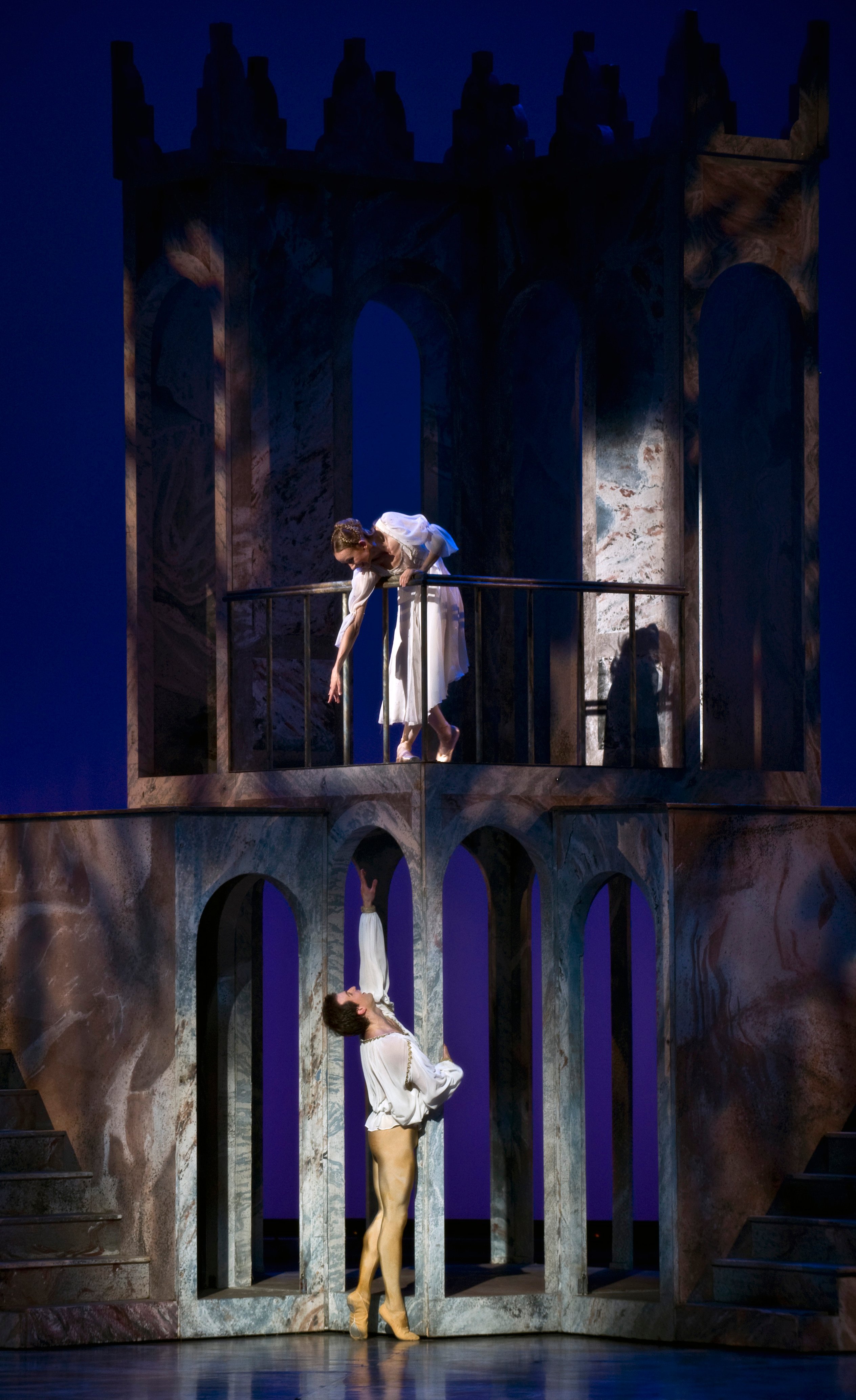
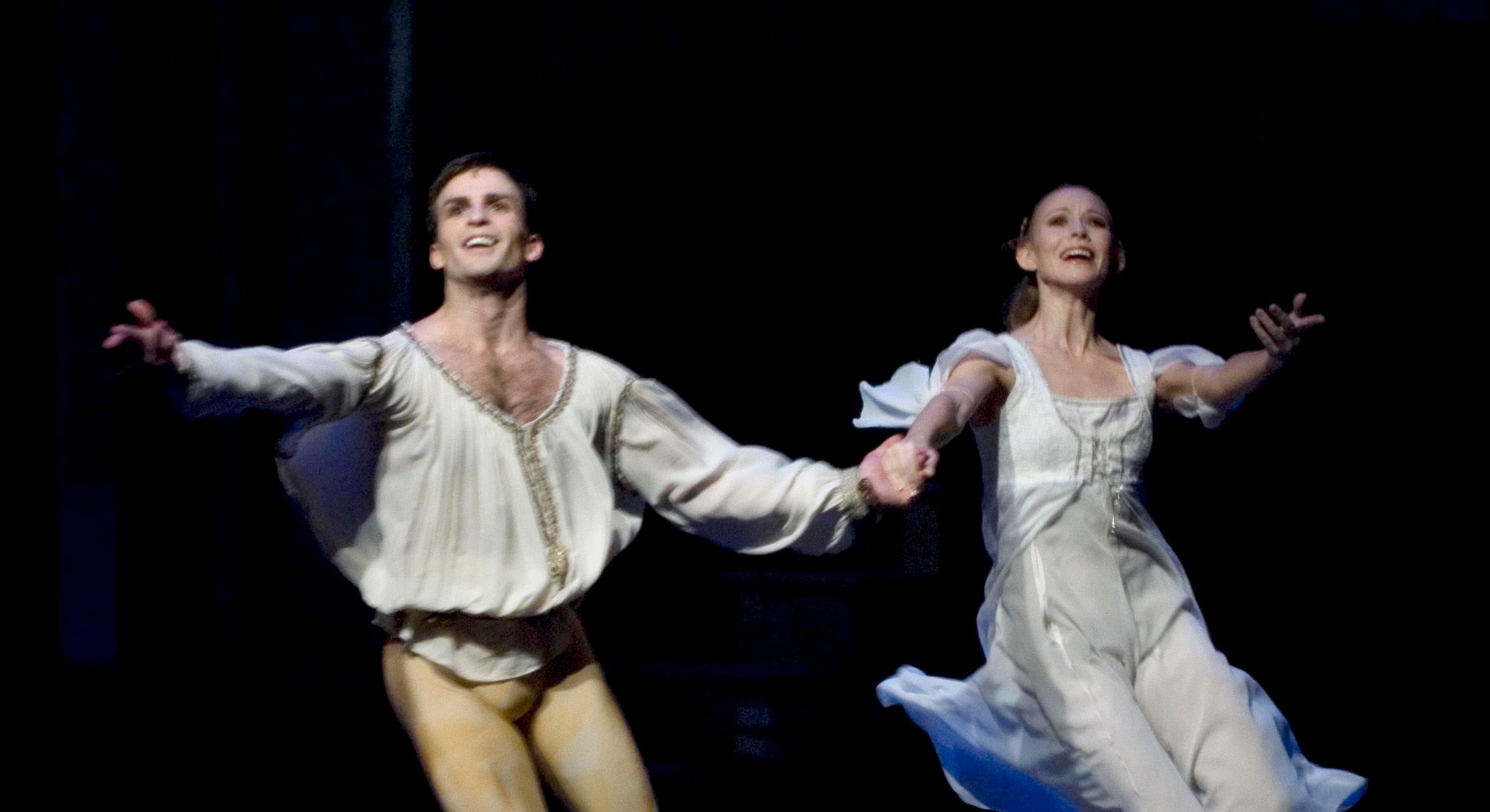
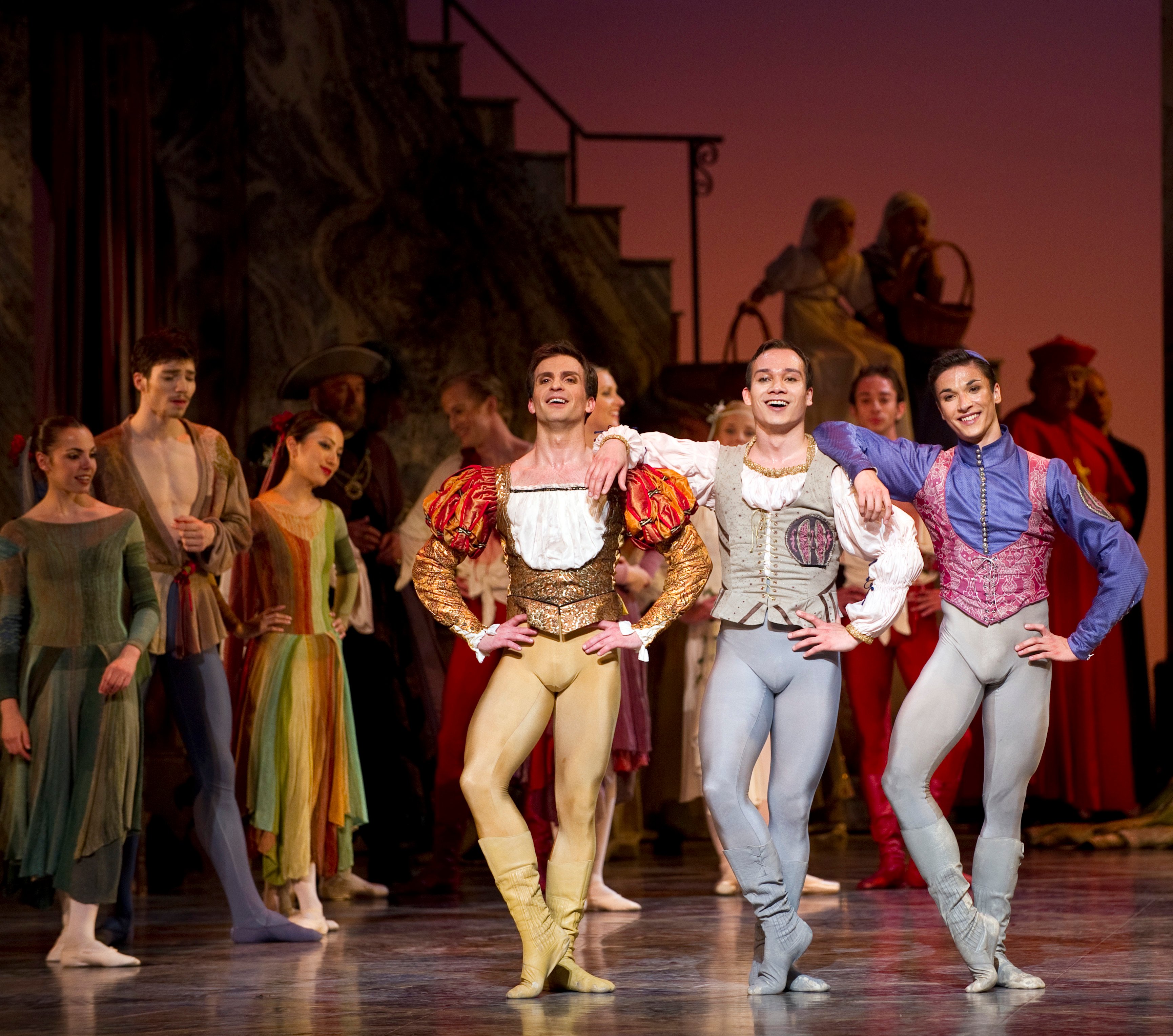
“I have experienced the ballet from the inside, emotionally. It was a different choreography and a different production, but the roles are the same. When I danced them, I inhabited them in my own way, and I can see some of that in what I’m creating now.”
At the same time, the aim is not to recreate what he himself did, but to open space for the dancers’ own interpretations.
“We talk about how I see the characters, but to a large extent it is about what each individual brings to the stage.”
This is where the performance comes into being.
“Ballet is an art of the moment. My ideas and my choreography form the structure, but it is the dancers that give the performance colour. Each of them brings their own distinctive character.”
A work for the whole company
As a full-length work, Romeo and Juliet asks a lot of the Norwegian National Ballet: nearly 60 of the company’s 70 dancers are on stage at the same time, and several casts share many of the roles.
"For the ballet company, and especially for the soloists, it involves a major effort to dive deep into the roles and more detailed character work. Works like this develop the company, both artistically and as an ensemble.”
Kaloyan also emphasizes that the production gives everyone an opportunity to step clearly forward—as artists and people.
“For me, there are no small roles. Everyone on the stage has to give one hundred percent for the work to come alive. Imagine a painting: if you only have the central figure and leave the rest blank, it’s not going to be good.”
In this production, dancers meet across experience levels—from young performers to established soloists, and even some of the company’s former dancers. Several of the dancers in the leading roles started their careers in the Norwegian National Ballet 2, the talent programme Kaloyan himself helped establish more than ten years ago.
“They are adults, and I have children of my own, but it is a bit like watching my children grow up. When they started, they were very young, and now I see them stepping into leading roles in this and other productions. It’s very fulfilling. At the same time, I am quite critical, because I want them to succeed.”
The machinery of music
“I always start with the music. Prokofiev’s Romeo and Juliet is one of the best ballet scores ever written. It is full of feeling and desire, love and hate, and it paints such powerful images.”
For Kaloyan, the music is the dramatic driving force of the work.
“Prokofiev tells me, in a way, when someone should enter and what the mood of the situation should be. It gives both great freedom and at the same time a very clear structure.”
At the same time, it is also about personal interpretation.
“Everyone has their own take on art. The other day in the studio, a colleague said, ‘this is the best part of the whole ballet’. I had to disagree—for me, it is Julie’s interlude in the third act.”
Romeo and Juliet is a story most people have a relationship with, and audiences often enter the auditorium with their own expectations.
“I have tried to stay as close to the play and the music as possible, while also adding my own vision. It is a demanding balance, because both are masterpieces.”
That also involves some adjustments—including to the ending—and Kaloyan is keeping the cards close to his chest about exactly how it exactly ends on the main stage of the Oslo Opera House.
"What’s funny is that there are actually two endings. Prokofiev originally wrote a happy ending. We are going for a dramatic ending, but with a little twist.”
Verona in Bjørvika
The visual universe of Romeo and Juliet has been created in collaboration with a Tony- and Olivier Award-winning team: set and costume designer Christopher Oram and lighting designer Neil Austin. The collaboration with the artistic team has been decisive for the whole, Kaloyan believes.
“Christopher Oram has literally helped transform our stage into Verona. I love how detailed he is—even the smallest elements are thoroughly worked through.”
In the orchestra pit stands the music director of the Norwegian National Opera and Ballet, Edward Gardner, one of the most prominent conductors of our time. For the first time, ballet will be danced on stage while he is on the podium.
“We worked closely with the score long before I began rehearsals in the studio. At the same time, I wanted him to approach Romeo and Juliet in the same way as if the work were to be performed without dancers. We have talked a lot about tempo and drive, and of course we have had to meet in the middle. He has been consistently enthusiastic and understanding, and he is an outstanding musician.”
Between stage and auditorium
“If I was going to choose just one word to describe Romeo and Juliet, I could of course say love,” says Kaloyan.
“That is the obvious answer—or courage, or honor. But I would rather say humanity. We all react from our own standpoint. I don’t believe that people are born either good or evil; even those who do wrong are shaped by what has happened to them.”
Despite all the hours, weeks and months that go into the work on stage, it is the encounter between stage and auditorium that matters most to him.
"I care a lot about audience reactions. When I watch The Nutcracker, I often keep an eye on the children in the auditorium. That is what I am most excited about now as well—how the audience will receive this. That is the most important thing.”
 Photo: Jörg Wiesner