Saturday 30. May
18:00
/
Scene 2


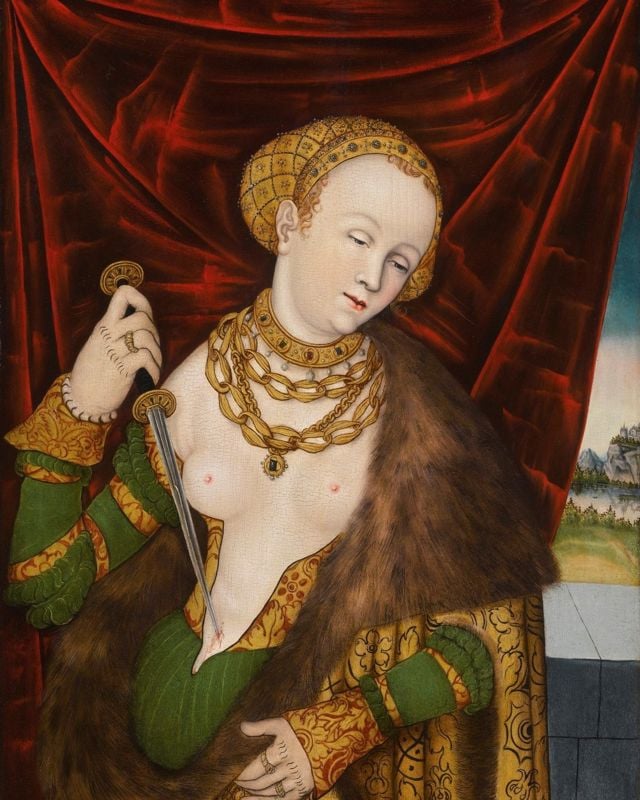 Lucretia (1525) / Photo: Monogrammist_I.W
Benjamin Britten at his most intense: a timeless drama about power, guilt, and silence – interpreted by the young voices of the Oslo Opera.
How does one go on living after an assault? And how can society – and art – contain what cannot be spoken?
Benjamin Britten’s The Rape of Lucretia from 1946 is one of the 20th century’s most concentrated and unsettling operas. With a small ensemble and an intense psychological closeness, it tells the story of Lucretia – the woman whose violation led to Rome’s uprising against tyranny, but who herself lost everything.
The story is based on a Roman myth more than two thousand years old, one that still feels frighteningly relevant. It deals with how women and men encounter one another, with power and vulnerability, and with the struggle against structures that uphold silent oppression.
With music that moves between the beautiful, the bare, and the unbearably painful, Britten transforms the myth into a modern existential drama about shame and the attempt at reconciliation.
In Peter Langdal’s new staging, the story is moved into our own time. A man and a woman sit on separate sofas, each with an iPad, following the events as a digital drama. Along with them, we look into a closed military environment where the boundaries between power and intimacy gradually erode. The stage becomes a screen – a frame through which we observe violence and silence without intervening.
The opera is performed by the five singers of the Wilhelmsen Opera Studio for Young Singers (WOYS) – the Opera’s talent programme for newly graduated singers entering a professional career. The Rape of Lucretia marks the end of their two years at the Opera and gives them a work that demands both technical precision and emotional courage.